
Independent Media in Türkiye:
Media Viability in a Complex Digital Environment
Dr. Sarphan Uzunoğlu & SABA ÇEVİK
Dr. Sarphan Uzunoğlu & SABA ÇEVİK
This research explores the survival and sustainability strategies of independent digital media organizations in Türkiye, focusing on the transition between improvisation and strategy. In a media environment marked by intertwined political pressures, economic constraints, and technological dependencies, the core challenge is no longer solely revenue generation. Instead, it is about cultivating resilience to navigate these multidimensional vulnerabilities. In this context, sustainability is approached not as a financial issue but as a structural one.
The study adapts DW Akademie’s Media Viability Indicators to the Turkish context. As the conventional five pillars—politics, economy, technology, community, and content—fall short in capturing the dynamics of Türkiye’s media landscape, additional dimensions such as organizational capacity and labor are integrated into the analytical framework. This expanded model reveals the multilayered nature of fragility within the media ecosystem.
Most independent media actors in Türkiye respond to crises through improvisation. Political repression, arbitrary censorship, algorithmic dependencies, restricted access to public resources, precarious labor conditions, and limited community engagement force these organizations to operate in a constant state of uncertainty. Thus, improvisation is not a choice but a necessary survival tactic.
The report centers on three distinctive media outlets that have managed to navigate this fragile ecosystem: Medyascope is attempting to build a more resilient model through institutional restructuring and revenue diversification. Fayn is developing a small yet stable structure rooted in a loyal community. Meanwhile, Gazete Duvar provided a striking example of how excessive reliance on algorithmic visibility can lead to sudden collapse. Each outlet confronts distinct vulnerabilities, illustrating that pathways to sustainability are not universal but contextual.
This report moves beyond financial hardships to scrutinize the structural vulnerabilities facing independent media in Türkiye. While political pressures distort market dynamics, technological dependence on platforms renders visibility precarious, and inadequate digital infrastructure makes independent publishing both costly and risky. In this context, censorship extends beyond content to encompass access and resources. Sustainability, therefore, becomes attainable only through institutional autonomy.
Although donor support enables the survival of independent outlets, it rarely contributes to long-term institutional resilience. Funding often prioritizes content production, while internal capacities—such as human resources, governance, and product development—remain underfunded. This dynamic fosters a reliance on external aid, impeding independent growth. Consequently, grantmaking models must be redesigned to support not only content but also the institutional infrastructure that underpins it.
The research also highlights the critical role of local civil society organizations. Their mission should extend beyond capacity building to include documenting improvisational responses and transforming them into frameworks for collective learning. Establishing shared mechanisms for technical support, peer-learning networks, legal and digital infrastructure, psychosocial solidarity, and product development could enable media organizations to develop systemic resilience beyond isolated crisis responses.
In conclusion, enabling independent media actors to transition from improvisation to strategy requires the construction of support structures from both the top down and the bottom up. While local actors can nurture organizational learning from the grassroots, donors must design funding models that bolster long-term structural resilience. Only through such synergy can Türkiye’s independent media evolve from acts of heroic survival to institutions of deliberate and sustained resistance.
The analysis is based on a qualitative research design that combines semi-structured interviews with several editors, union leaders, and media experts, alongside documentary review and desk research. All interviews were conducted between June and October 2025, allowing the study to capture a period of significant economic volatility and major platform changes that shaped newsroom strategies.
The data were interpreted through the Media Viability Indicators (MVIs) framework, adapted to reflect Türkiye’s hybrid and restrictive environment. Rather than measuring outlets against fixed benchmarks, the approach focuses on how practitioners themselves define and negotiate sustainability under pressure. This method allows the report to link structural analysis with lived experience, identifying both systemic patterns and adaptive practices across the independent media field.


Sustainability is not just about money—it’s a matter of systems: In Türkiye, independent media contend less with financial fragility than with structural vulnerabilities. Political repression, digital deprivation, and uncertainty in visibility steadily erode internal resilience.
Improvisation is a reflex—but without strategic transformation, it remains limited: Organizations capable of reacting quickly yet unable to generate institutional learning are doomed to repeat the same crises.
Trust is the new capital of next-generation media: Communities built through loyalty offer a form of resilience that neither advertising nor donations alone can provide—but cultivating these relationships demands labor, time, and transparency.
Algorithms offer visibility, but the ground is unstable: Platforms promise reach, yet the opaque and shifting rules of this system create a precarious playing field for independent media.
Funding sustains, but doesn’t scale: Grant structures limited to project deliverables may stimulate content production, but they fail to build the institutional backbone necessary for long-term viability.
When knowledge remains closed, crises repeat: In the absence of documentation and knowledge sharing, each outlet struggles in isolation. A culture of collective learning remains weak and underdeveloped.
Support is more than training—it’s walking alongside: Civil society organizations must move beyond skill transfer to foster institutional learning, reinforce psychosocial resilience, and facilitate shared technical capacity.
Resilience is built through coordination: While donors should strengthen institutional robustness from the top down, support actors must nurture adaptability and learning from the ground up. When this balance is achieved, media can move beyond mere survival toward structural renewal.
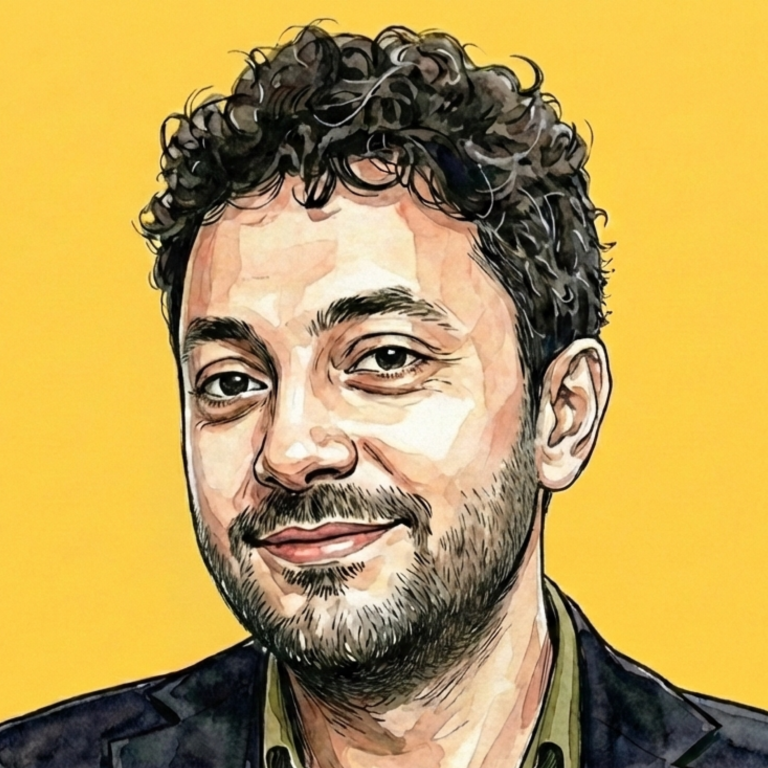
Dr. Sarphan Uzunoğlu is an Assistant Professor at Izmir University of Economics, Department of New Media and Communication. He is also the Founding Director of NewsLabTurkey and a consultant to various international civil society organizations.

Saba Çevik completed her undergraduate studies in Visual Communication Design at Izmir University of Economics in 2022 and is currently pursuing a Master’s degree in Design Studies at the same institution. Her work focuses on film, video, and multimedia design, with a particular interest in the communicative and informational capacities of audiovisual media.
Çözüm gazeteciliği ve araştırmacı gazetecilik programımız.
Gazetecilik ve yeni medya üzerine raporlar, araştırmalar.
Dünyanın medya ve gazetecilik gündemi burada.
Farklı konularda uzmanlarından ücretsiz atölyeler.